Robert Johnson
| FROM
THE BOLSHOI TO BALANCHINE BEHIND THE CURTAIN: Between the Life I Loved and the One I Chose Ballerina Valentina Kozlova occupies a special place in the history of Russian-American dance. Unlike the 20th-century’s other great defectors, she and her former husband, Leonid Kozlov, pledged their fortunes to New York City Ballet, challenging themselves to adapt their Soviet training to that company’s eccentric style of classicism. Other Russian dancers came and went, sampling the wares in the West’s great choreographic bazaar. The Kozlovs, however, committed themselves to choreographer George Balanchine’s vision, submitting to his company’s no-star system, and remaining there after the master’s death. Before perestroika opened Russia’s doors to Balanchine in a big way, the Kozlovs were there---the first of a new breed.
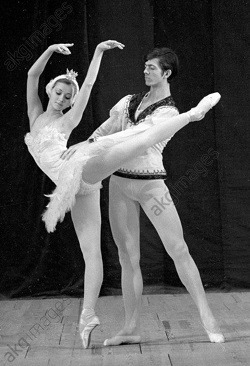
Kozlova recounts how this happened in her new memoir, “Behind the Curtain,” an inspiring tale of bravery and daring spiced so readers will keep turning the pages. The dancer, now 69, begins recalling her impoverished childhood and her acceptance into the Bolshoi Ballet School, a miraculous change that opened the gates of paradise. She was a young Stakhanovite, working single-mindedly and overcoming accident to blossom as a star. Kozlova’s triumphs at the Bolshoi, particularly in Leonid Lavrovsky’s “Romeo and Juliet” and Yuri Grigorovich’s “The Stone Flower,” demonstrated her ability to assimilate new material and grow, a talent that would serve her well in America.
Meanwhile, Kozlova had attracted the attention of a handsome soloist who curiously shared the same surname. Over the hysterical objections of her mother, Leonid Kozlov would become her husband and Svengali, an ambitious artist equally dedicated to the search for perfection. As Mama Kozlova suspected, Leonid Kozlov would take her baby on a wild ride, not only because of the stick-shift on the couple’s Lada automobile (did he even have a driver’s license?). Though as ballet stars the Kozlovs led a privileged life, in those days Soviet citizens still lined up to buy eggs and store-clerks relished being nasty to customers. The couple shared a narrow bed, and were lucky other families didn’t share it with them. Leonid Kozlov harbored a forbidden taste for rock ‘n roll, and from the earliest days of their marriage he dreamed of escaping to the West. What if? The opportunity came in 1979. On a Bolshoi Ballet tour in Los Angeles, the couple walked the tight-rope to freedom, and soon found themselves adrift in a dizzying new world of choices and unaccustomed burdens. Kozlova’s first shopping excursion to Bloomingdales left her mute, and she had never written a check or paid taxes. In New York, she resented having to schlep her dance bag to private studios where the technique classes were crowded with all comers, and the combinations seemed bizarre. At first, the challenge of dancing Alvin Ailey’s “The River” seemed insuperable, but with the choreographer’s encouragement she persevered. Time and again in this narrative, we see Kozlova confront the new and untried, marshal her resources, and attain a higher plateau. Her willingness to test herself enriched her artistry and rewarded her effort with renewed self-confidence.
During the Kozlovs’ first years in New York, guest engagements were plentiful, but the couple longed for an artistic home that might approximate the security they had known at the Bolshoi Theater. The Australian Ballet provided this home initially, and Kozlova continued to mature as an artist dancing André Prokovsky’s dramatic “Anna Karenina” and all the female solos in Serge Lifar’s virtuosic “Suite en Blanc,” among many other works. Still greater challenges awaited. Unbeknownst to Kozlova, Balanchine had been watching her from afar. Out of the blue, she received an invitation to audition for a revival of the Broadway musical “On Your Toes,” featuring Balanchine’s “Slaughter on 10th Avenue.” For the first time in her life, the ballerina found herself speaking on stage. Taking classes with “Luigi,” she gleefully mastered the musical’s jazz-dance vocabulary. One night, during a soigné dinner at Balanchine’s apartment in the Hotel des Artistes, he invited the Kozlovs to join his company. What followed was another artistic culture shock. Here is how Kozlova describes her reaction to learning the high-flying First Movement of Balanchine’s “Symphony in C:”
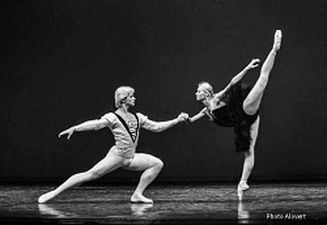
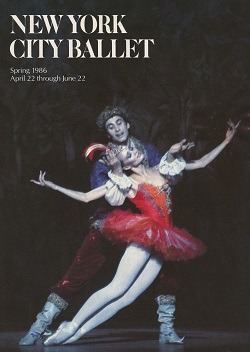
All might have been well, if Balanchine had not died in 1983---the same year the Kozlovs joined the company. Then, like everyone else, they plunged into the endless morass of incompetence that characterized the Peter Martins regime. In her memoir, Kozlova is kind to Balanchine’s feckless successor, so it must be said here. Martins was a disaster. Nonetheless, the Kozlovs persevered, and continued to dance together after they divorced. To the disappointment of those with parochial tastes, Kozlova never conformed entirely to the City Ballet profile. She never lost her classical base, or her identity. Instead, she became a stylistic hybrid, who enriched City Ballet’s performances with her dramatic experience, Soviet plastique, and Romantic sensibility. Her repertory burgeoned, and when Leonid Kozlov was able to organize a private tour to Moscow in 1991, she returned home to demonstrate what she had accomplished in “Concerto Barocco,” “Symphony in C,” “Apollo,” and “Allegro Brillante.”
In “Behind the Curtain,” the ballerina relates these stories and many more in lucid detail, describing ghastly injuries, paying tribute to her mentors, and supplying colorful sketches of famous colleagues like Rudolf Nureyev. With the birth of her daughter, Clelia, Kozlova says she gained an understanding of her relationship with her own mother. Discreetly, she recounts a succession of marriages and love affairs. Kozlova retired from City Ballet in 1995, but did not leave the stage until 2017 having danced 42 years as a principal. Now a sought-after teacher and coach with her own school in Connecticut, she directs the Valentina Kozlova International Ballet Competition, a platform for aspiring artists. Observers who have watched her coaching young dancers describe the same, intense dedication to artistry that sustained her brilliant career in the spotlight. |